
New Dog, New Tricks: How Parker Cohn and PRM Are Changing The Way The Game Is Played, and Sustained
By Michael Williams, Contributor, Golf Business
In life, one of the most difficult things to be is different. We learn from our earliest days that the one who has a slightly unusual way of dressing, of talking, or just getting around from day to day can be an object of somewhat uncomfortable attention.
Even with its increased popularity, that is also the case when it comes to golf, a game and an industry that is grounded deeply in its observance of tradition. Sometimes, a healthy respect for time-honored values can turn into a stubborn reliance on old habits, but the innovator that emerges in this most conventional of fields truly has an idea that is built to last.
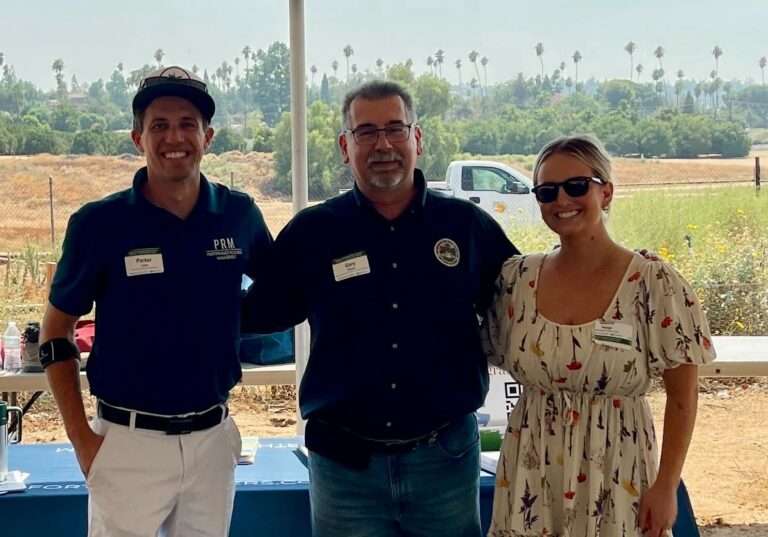
Parker Cohn is, to say the very least, different. As the CEO of Performance Resource Management (PRM), Cohn has blazed a very different trail in the game than most other executives. His company has introduced a dramatically different way of managing course conditioning, and it could very possibly be a beacon for how golf course maintenance is done.
Like most kids, Cohn had a plan for himself that was somewhat different than the one he pursued as an adult. “I loved baseball and I wanted to be the next Derek Jeter,” recalls Cohn. “He was always a positive force, the captain of the Yankees, and was the kind of successful man I wanted to grow into.”
While his baseball career finished somewhat short of Jeter’s, Cohn’s talent in the classroom took him to the University of San Diego’s Engineering School, where he excelled in Mechanical Engineering. “Actually, I can thank my dad for putting the US News World Report top degrees and career paths on my desk every year in high school, and mechanical engineering was always in the top four or five degrees you can get that have the most applications out there,” remembers Cohn. “I went to school wanting to learn how to solve big problems. And engineering naturally is about solving problems, so it kind of gave me the most robust toolbox of skills in order to start attacking problems as a working professional.”
Golf also arrived early in Cohn’s life. “When I was three or four years old, my grandfather cut off some used women’s clubs and re-gripped them. So I had a little set of like three clubs; a three wood, a seven iron, and a putter and maybe a wedge,” recalls Cohn. “I was introduced to golf as a family experience. When my family was getting together through the years of growing up, we would play golf together. It was really a way that I was able to bond with my family, and my grandfather in particular, over the course of the years.
With both problem solving and golf in his life, it seems only natural that Cohn would turn his intellectual talents towards solving one of the game’s most persistent puzzles: Growing healthy turf in some of the world’s most challenging environments.
“I actually started PRM in agriculture, where we really focus on yields, inputs, and cost per acre,” notes Cohn. “But golf was also a great industry for PRM,” he continues. “I love the golf industry because it provides a way for me to relate to people. When you talk about hundreds or thousands of acres of tomato farms or alfalfa farms, it’s very difficult to reach the feelings of the end consumer. When you buy a tomato at the supermarket, you don’t really understand how that tomato got there, or how much water was used, or how many chemicals were used, and most people don’t care.”
“But golf is so wonderful, because so many people play it,” continues Cohn. “And golf is also a polarizing sport, right? I think it’s something like 10% of the population plays golf. But on the other hand, there are 90% who don’t play golf. And when they drive by a facility, maybe they’re thinking that the golf course is wasteful, they’re spraying pesticides. Or maybe they’re overusing water. So when I go out and work with a golf course, and we’re able to save 40% on the water we use in a year, when we can drastically reduce the amount of pesticides that are used and at the same time dramatically improve the quality of play and reduce the cost of keeping it that way throughout the year, that’s substantial. That resonates.”
The revolutionary product that is PRM consists of what could be called probiotics for turf. PRM uses a blend of natural components that is formulated to specifically combat problem areas in turf such as compaction, disease, nutrient imbalances, and drainage while simultaneously promoting the growth of healthy turf. Cohn has successfully integrated PRM into some of America’s most well-known and prestigious courses. One of the most successful applications has been the Brentwood Country Club (CA). At Brentwood, PRM was used not only to improve conditions, but to reduce the amount of water that was used in an area that is highly sensitive to how water is managed.
“Within the golf market, my greatest sense of success happened last year (at Brentwood) when I more than proved that PRM demonstrated its value, purely based on water savings. My proudest moment in golf was when I provided far more value just in one line item of water savings alone. We have the cost savings of that water that we didn’t use and the electricity that we didn’t use to pump it, which based on Los Angeles Department of Water and Power rates is over $425,000 a year.
And then we see we saved 60% electricity on. That’s $35,000 of electricity that we’re not using to pump that water. Now, on top of that, there’s a rebate incentive that I was able to process for Brentwood, which was over $330,000 from the utility. So you’re looking at one line item, water, generating over three quarters of a million dollars back in a year.
Cohn continues, “And we just finished year two of monitoring, and we were able to save an additional 10%. We saved 20 million gallons of water in year one. We saved 22 million gallons in year 2. That shows that our technology is regenerative as results repeat year after year.”
Multiple courses have benefitted from the impact of using PRM, and the word is beginning to spread to more courses. Cohn is currently in the process of negotiating regional agreements with courses in several states that have golf operations ranging from five-star to come as you are. What they all have in common is the need for efficient use of natural resources and a reduction in cost. Even in boom times for golf, resource management and profitability are inextricably linked and PRM is positioning itself to be an essential tool for owner/operators that understand that dynamic.
As PRM continues to make an impact on the golf industry, Cohn recognizes that the NGCOA has been an integral part of doing business in the golf space. “NGCOA is a phenomenal network. The association has such a good platform for networking with individuals and movers and shakers in the golf industry,” says Cohn.
“They do a great job of putting out very highly relevant content that’s meaningful to the membership. They host events where you can go attend and talk to a number of folks from entrepreneurs to established brands in the golf industry and really learn from them, network and collaborate. You can work together to preserve golf for everybody, to make golf more accessible, to make golf have less of an environmental footprint, to make golf more efficient, more profitable, more inclusive. It’s beneficial for business, and at the end of the day, it’s beneficial for the game of golf.”
For now, Parker Cohn and PRM are on the cutting edge of golf course maintenance. One day soon, they just might become the norm.